




What Happened
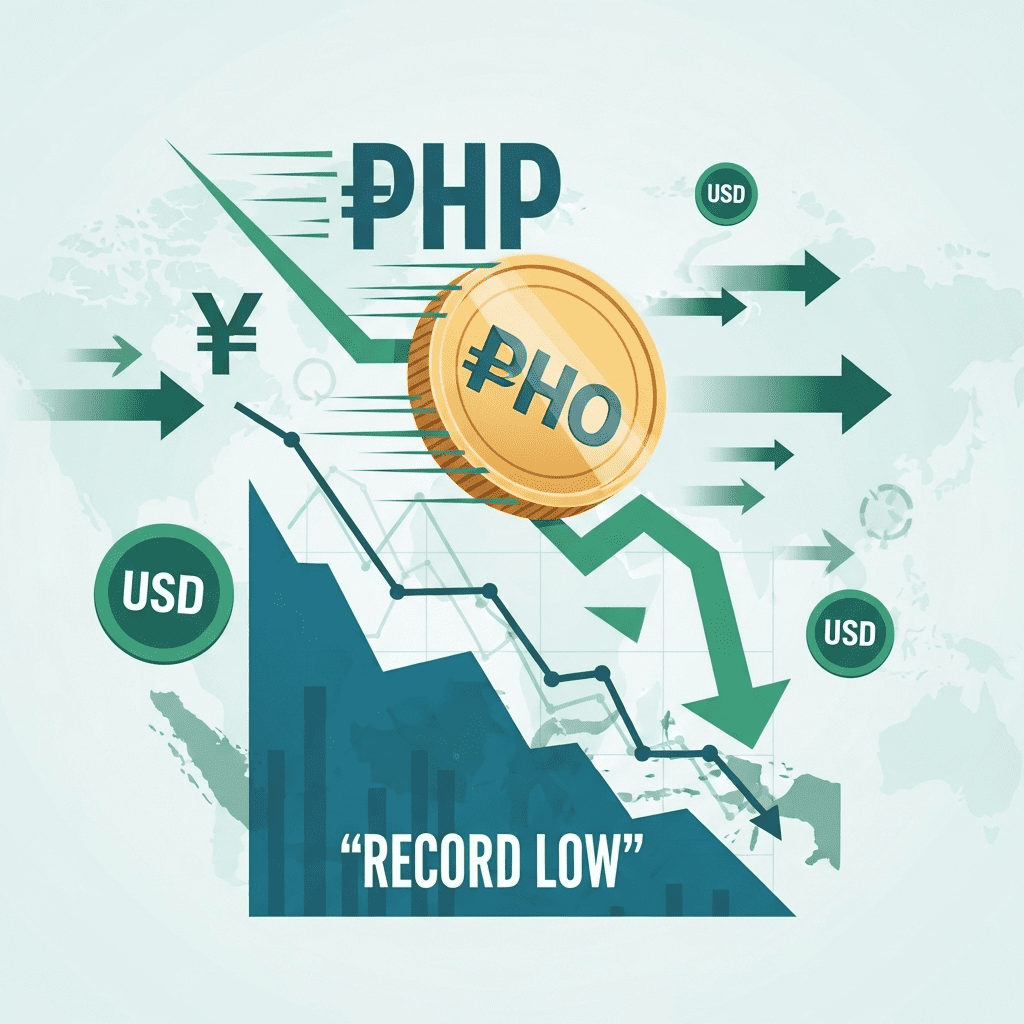
The Philippine Peso falls to new record low against the US dollar, dropping to PHP 59.20 per USD in late June 2025, as renewed expectations of higher-for-longer Federal Reserve rates pressured emerging market currencies. According to Bloomberg, the peso’s historic dip was driven by persistent portfolio outflows and the Bangko Sentral ng Pilipinas (BSP) maintaining its benchmark interest rate at 6.5% for a fifth consecutive meeting. The US dollar’s broad strength and investor reallocation away from riskier assets in Asia intensified sell-off momentum in the Philippine currency. This marks the lowest point for the peso since official records began, amplified by a notable drop in foreign reserves and weaker-than-expected remittance growth.
Why It Matters
The peso’s slide reverberates across Southeast Asia, signaling growing vulnerability for regional markets in the face of hawkish US monetary policy. A weaker peso raises import costs for the Philippines, stokes inflationary pressures, and potentially complicates monetary policy decisions for the BSP. Historically, similar declines—such as during the 2018 and 2022 outflow cycles—were followed by reduced foreign investor participation across equities and local bond markets. Market observers have pointed to an estimated $1.6 billion in net portfolio outflows from the Philippine Stock Exchange (PSE) so far in 2025 (Reuters), underscoring mounting risk aversion. The movement has caused ripple effects in the broader Asian FX landscape, as investors increasingly favor dollar-denominated assets over emerging market positions.
Impact on Investors
The record lows of the Philippine Peso present both challenges and opportunities for investors. Philippine equities (PSEi: PCOMP) have fallen 4.2% month-to-date, mainly on fears of eroding consumer spending power and slower economic growth. Meanwhile, exporters with significant dollar earnings, such as Universal Robina (URC.PS) and San Miguel Corp (SMC.PS), could see short-term windfalls, while import-dependent firms face margin squeezes. Local bond yields have also climbed, reflecting diminished demand from offshore participants. “Persistent capital outflow and policy divergence with the Fed have left the peso under significant pressure,” says Maria Javier, senior economist at BPI Securities. “Investors should closely monitor US inflation data and upcoming Fed guidance as catalysts for possible stabilization.”
For those considering tactical moves, hedging strategies or selective positioning in hard currency assets may be attractive. For more detailed sectoral impacts, see investment insights on ThinkInvest.org.
Expert Take
Analysts note that further peso weakness is possible if the central bank maintains its cautious stance on rate hikes, especially as remittance inflows soften. Market strategists suggest keeping an eye on official intervention signals, as the BSP has a track record of measured responses aimed at curbing excessive volatility. For broader regional context and macroeconomic drivers, read our market analysis.
The Bottom Line
The Philippine Peso falls to new record low amid intensifying global rate uncertainties and persistent capital outflows, spotlighting the delicate balance faced by policymakers and investors. With external pressures unlikely to abate in the near term, cautious allocation and vigilant monitoring of currency and macro trends remain key for those exposed to Philippine assets. Stay updated with the latest currency developments and strategic perspectives at ThinkInvest.org.
Tags: Philippine Peso, forex, Southeast Asia, capital outflow, stock market.