




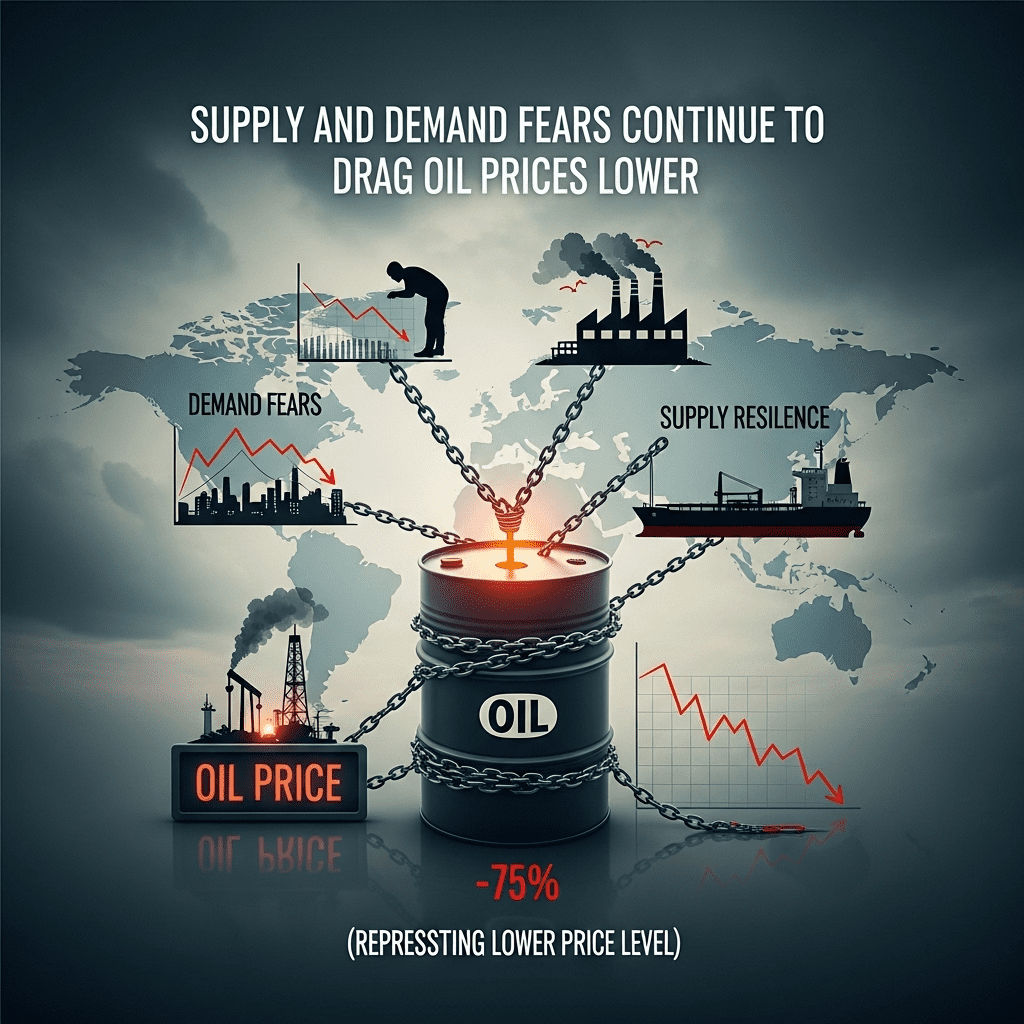
Global energy markets are facing heightened volatility as supply and demand fears continue to drag oil prices lower in 2025. Investors are closely watching shifting economic forecasts, geopolitical moves, and unexpected changes in crude inventories, all contributing to ongoing uncertainty in oil price trajectories.
Supply and Demand Fears Continue to Drag Oil Prices Lower: Key Drivers in 2025
This downward trend is fueled by a combination of persistent macroeconomic headwinds and evolving industry dynamics. Surplus inventories in major oil hubs, stagnant economic growth projections from both developed and emerging economies, and shifts in global energy consumption have amplified traders’ concerns. Despite periodic supply cuts from OPEC+ and renewed attempts at demand stimulation in Asia, oil futures have persistently traded lower, reflecting investor anxiety over a mismatch between the world’s oil output and its actual energy needs.
Macroeconomic Uncertainty and Oil Demand Outlook
Analysts point to sluggish global economic activity as a primary catalyst for falling oil demand. The IMF’s revised 2025 global growth outlook forecasts only a mild rebound, as inflation and higher-for-longer interest rates dampen industrial activity and consumer mobility. China, traditionally a major driver of oil consumption, continues to recalibrate its economy toward services, curbing what was previously a robust appetite for crude imports. Simultaneously, developed markets are accelerating their green energy transitions, squeezing oil’s share of energy consumption. These factors, according to market strategists at leading investment banks, are eroding price support and reducing speculative activity in oil contracts.
Resilient Supply Despite Geopolitical Risks
Normally, geopolitical tensions—from Middle Eastern shipping disruptions to Russian export curtailments—tend to underpin oil prices. Yet in 2025, supply-side resilience has outpaced market expectations. U.S. shale output remains steadfast despite falling prices, while non-OPEC producers in South America and West Africa have ramped up exports. Meanwhile, OPEC+ cutbacks have struggled to gain traction within the broader context of ample global stockpiles. The U.S. Energy Information Administration recently reported above-average inventory builds in major storage facilities, stoking fresh concerns among energy traders that a supply glut could persist throughout the year.
Implications for Investors as Supply and Demand Fears Continue to Drag Oil Prices Lower
For those monitoring portfolio diversification strategies, 2025’s oil price slump underpins the need for careful sector allocation. Energy stocks have experienced increased volatility, while oil-dependent currencies struggle to maintain their value. Asset managers are reassessing exposure to oil majors and integrated energy firms, favoring diversified approaches or alternative assets, such as renewables and clean tech.
Opportunities and Risks in the Current Oil Market
While low oil prices can benefit sectors reliant on fuel—such as transportation and logistics—they also pose risks for oil producers and emerging markets reliant on petroleum revenues. Savvy investors are leveraging real-time market data and economic news to anticipate volatility. Hedging strategies, including options and futures contracts, are gaining popularity as means to navigate unpredictable price swings.
Long-Term Market Outlook
With the energy sector at an inflection point, long-term projections remain complex. The increasing adoption of electric vehicles, expansion of renewable infrastructure, and government efforts to curb emissions are likely to subdue oil demand growth for years to come. Meanwhile, supply dynamics could remain fluid, especially if OPEC+ members attempt deeper cuts or if geopolitical flashpoints escalate unexpectedly. For ongoing analysis and investment insights in the energy sector, staying informed and adapting to shifting market signals will be essential for professionals and retail investors alike.
Conclusion: Navigating Volatility as Supply and Demand Fears Continue
As supply and demand fears continue to drag oil prices lower, 2025 is shaping up to be a defining year for the global energy landscape. Oil market participants must weigh complex economic, geopolitical, and industry-specific factors in their decision-making. Staying attuned to market data, policy developments, and expert analyses will be vital for navigating ongoing instability in the oil sector.