




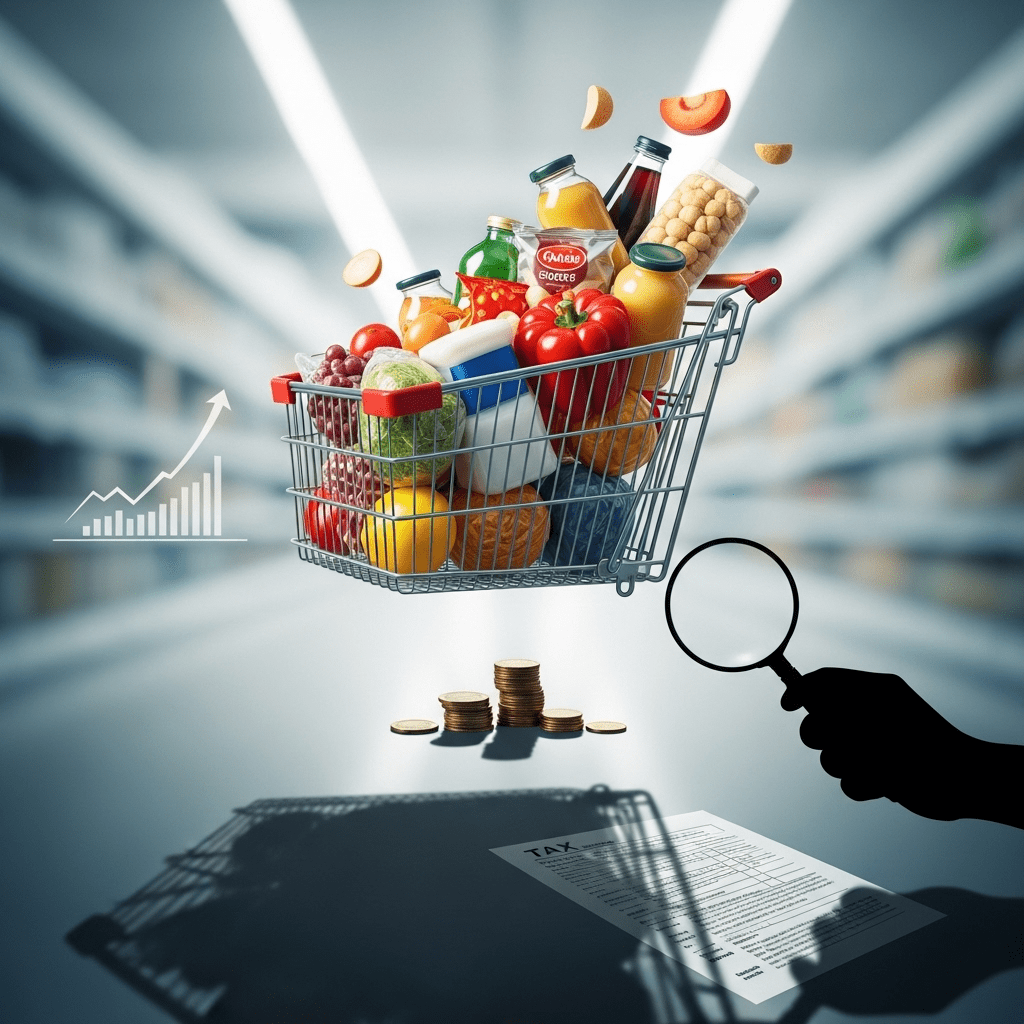
Tax rises could push food prices higher, warn supermarkets and industry groups, intensifying investor concerns over inflation heading into 2025. Retailers cite mounting tax burdens as a catalyst for accelerating consumer price growth, potentially reshaping sector outlooks and investment trends.
What Happened
Leading UK supermarkets and grocers sounded fresh alarms this week, warning that government tax rises could push food prices higher across key categories in 2025. In a letter coordinated by the British Retail Consortium (BRC), major chains including Tesco (LON: TSCO) and Sainsbury’s (LON: SBRY) cited rising business rates and incoming regulatory levies as material cost pressures threatening to feed through into retail pricing. According to industry data shared by the BRC and reported by Reuters, overall food inflation slowed to 3.7% year-on-year in May, but executives argue that structural tax hikes risk reversing March’s progress. “If further financial burdens are imposed on retailers, it is inevitable that food prices will rise for consumers,” said Andrew Opie, Director of Food and Sustainability at the BRC. Supporting these warnings, a recent Kantar report showed that, following previous tax increases, average UK grocery bills climbed nearly 19% between 2021 and late 2023. (Source: Reuters)
Why It Matters
The risk that tax rises could push food prices higher comes at a sensitive time for both the economy and the investment community. After two years of historically high food price inflation, recent moderation has been viewed as a positive sign for disposable incomes and Bank of England policy normalization. Reversals would not only pressure household budgets but could also complicate policymakers’ efforts to meet inflation targets—especially if higher costs filter through to the broader consumer price index (CPI). According to HSBC analysts, food and non-alcoholic beverages represent more than 10% of the UK CPI basket, meaning even modest increases can have outsized macroeconomic effects. If business rates and regulatory levies intensify, the result could echo the post-pandemic spike of 2022, when food inflation outpaced wage growth and drove retail shares lower. The warning from supermarkets underscores how fiscal policy can directly shape sectoral dynamics and consumer spending, with knock-on effects for the entire UK economy. For additional market analysis, investors continue to monitor headline CPI, supermarket margins, and regulatory developments closely.
Impact on Investors
For investors, the prospect that tax rises could push food prices higher injects fresh uncertainty into consumer defensive sectors and the broader retail landscape. Supermarket shares such as Tesco (TSCO.L), Sainsbury’s (SBRY.L), and Ocado Group (OCDO.L) could see increased cost pass-through pressures, potentially impacting earnings and compressing margins. While food retailers have performed resiliently versus cyclical peers, analysts warn that their relative pricing power may be tested if input and regulatory costs continue to escalate. “Sustained tax increases could trigger renewed price competition or even demand elasticity, as consumers trade down or shift to discounters,” comments Sarah Reeves, Senior Consumer Analyst at Redburn Atlantic. In response, investors may seek diversification strategies or favor retailers with superior supply chain efficiencies. Monitoring the FTSE 350 Food & Drug Retailers Index (FTNMX4570) and forward-looking inflation indicators remains crucial, as does reviewing investment insights on defensive sector positioning.
Expert Take
Analysts note that the sequence of fiscal tightening and regulatory levies risks undermining recent gains against food price inflation. Market strategists suggest that investor sentiment toward supermarkets and consumer staples may hinge on government tax policy clarity and the ability of retailers to manage cost pass-through effectively.
The Bottom Line
The warning that tax rises could push food prices higher spotlights the delicate balance facing supermarkets, investors, and policymakers as 2025 approaches. While retail sector resilience has been notable, persistent tax and regulatory headwinds threaten to disrupt the path to lower inflation. Investors will benefit from monitoring fiscal developments closely and seeking active exposure to companies that demonstrate pricing power or innovative cost management. For further coverage on economic policy and sector impacts, explore ThinkInvest’s research library.
Tags: food inflation, supermarket sector, UK economy, retail stocks, business rates.