




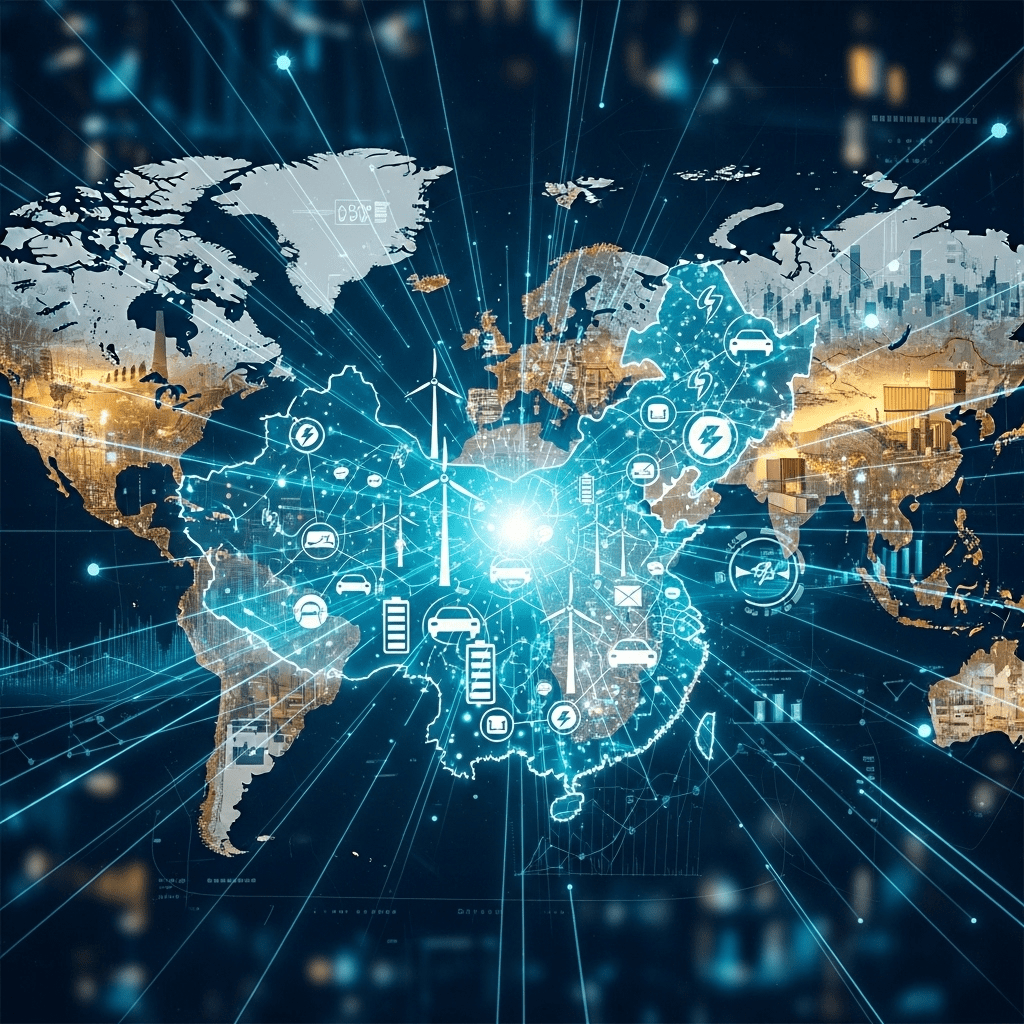
China’s rise as an electrostate has fundamentally altered the dynamics of global commerce, technology, and investment, causing a profound ripple effect across the world economy. As China consolidates its position as a leader in the production and deployment of electric vehicles, renewable energy technology, and battery manufacturing, investors and analysts are closely examining the implications for global supply chains, trade policy, and sustainable growth.
The ‘Profound’ Global Impact of China’s Rise as an Electrostate
China’s rise as an electrostate refers to its strategic dominance in electrification industries, particularly the production of batteries, electric vehicles (EVs), and renewable energy components. This rise is underpinned by systematic investments, government support, and an aggressive focus on technology innovation. In 2025, global markets are experiencing the consequences of China’s leadership, as countries become increasingly reliant on Chinese-made technology for the green transition.
China now controls over 75% of the world’s lithium-ion battery capacity and is home to the largest ecosystem for EV manufacturing. The ripple effect extends through global value chains, affecting everything from raw mineral extraction to advanced power grid technologies. Global automakers, tech firms, and even governments are reassessing supply chain resilience and seeking new economic strategies to adapt.
Investment Flows Reshape the Global Economy
The capital shift enabled by China’s rise as an electrostate is significant. International investors are pouring funds into Chinese manufacturers and clean energy innovators, recognizing the profit potential and market sway of industry giants such as CATL, BYD, and NIO. In turn, other countries are developing policies to stimulate domestic electric and renewable sectors, often collaborating with China on joint ventures or importing critical components.
With China setting pace on manufacturing standards, price structures, and volume production, its electrostate status has also put pressure on legacy automakers in Europe, the US, and Japan to diversify their supply chains and innovate at unprecedented rates. For investors, this means new opportunities in sustainable infrastructure, as well as increased competition and market volatility.
Technology, Trade Policy, and Geopolitical Realignment
The technological dominance stemming from China’s rise as an electrostate has reignited debates around trade security, intellectual property, and technological sovereignty. As Beijing pushes forward with its “dual circulation” strategy to boost both domestic consumption and high-tech exports, other economies strive to reduce dependency on Chinese tech components while expanding bilateral and regional trade agreements.
This complex interplay influences not only cross-border investment decisions but also the evolution of global norms on sustainability and innovation. Policy makers globally are negotiating the fine balance between embracing cost-effective Chinese technologies and safeguarding their own strategic industries. Export controls, critical minerals strategies, and tariff adjustments are becoming common as nations seek to secure a foothold in the new electrified world order.
Sustainability and Environmental Considerations
China’s rise brings significant implications for the global green transition. On one hand, China’s dominance drives down costs for clean technologies, accelerating global adoption of EVs and renewables. On the other, the concentration of industry raises supply chain vulnerabilities and environmental concerns regarding resource extraction and recycling.
International cooperation on standards for ethical sourcing, emissions controls, and closed-loop manufacturing is vital to ensure the sustainability of this new electrostate-driven economy. By 2025, the need for transparent regulations and harmonized certifications is more pressing than ever as governments grapple with the dual challenge of rapid growth and environmental stewardship.
Looking Ahead: Strategic Opportunities and Challenges
The profound global impact of China’s rise as an electrostate continues to reverberate across all sectors of the economy. For business leaders, analysts, and investors, staying informed on China’s technological advancements, policy shifts, and international partnerships will be crucial for strategic planning. Diversification of supply chains, investment in alternative energy tech, and international collaboration are set to define the next phase of global economic competition—and cooperation—in the electrification era.
While the opportunities are transformative, the challenges around security, environmental integrity, and equitable growth cannot be overlooked. Understanding China’s role as an electrostate is pivotal for anyone navigating the fast-evolving landscape of the global economy in 2025 and beyond.