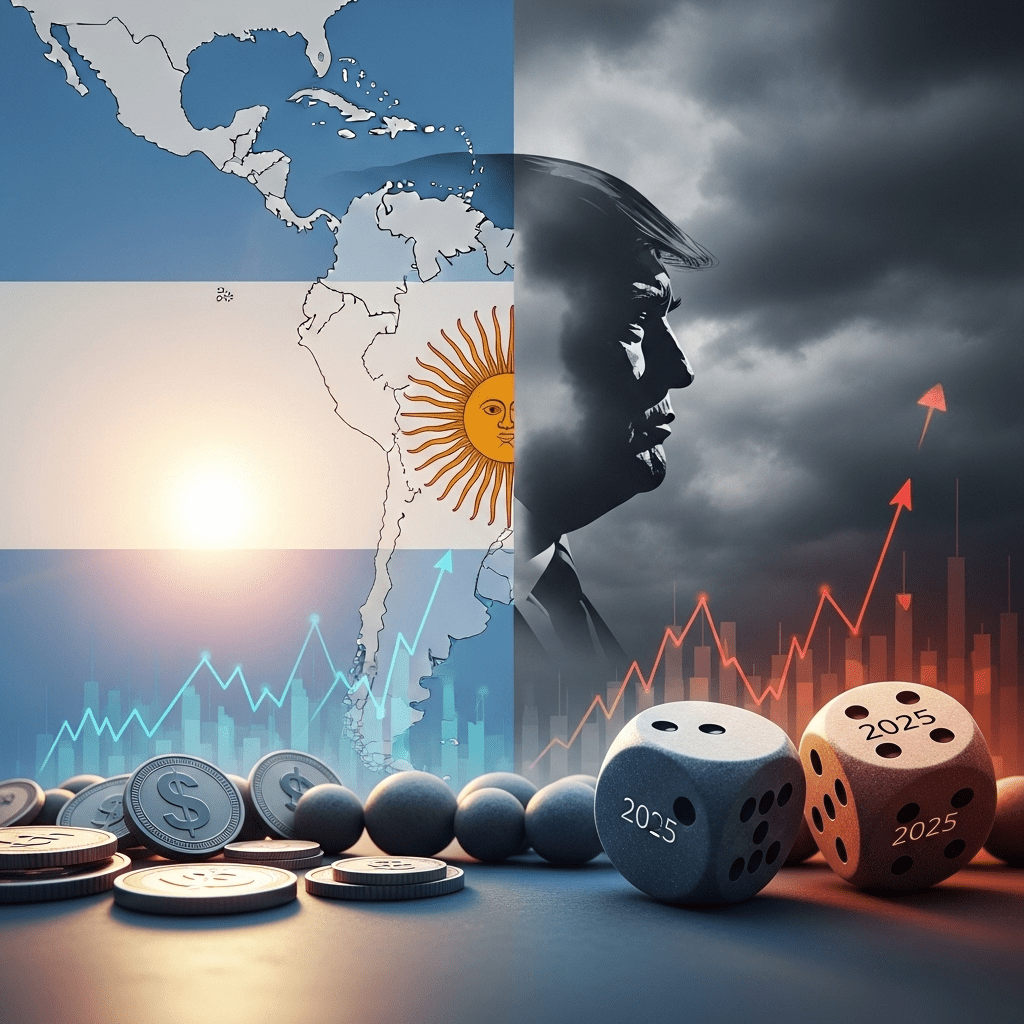
Trump’s gamble on Argentina has become a focal point for global investors and economists in 2025, as the former U.S. president’s policies and rhetoric continue to influence international finance, bilateral trade, and emerging market stability. The consequences of this high-stakes maneuvering have sent ripples across the South American nation’s economy, drawing attention from leading financial analysts and market watchers.
Trump’s Gamble on Argentina: What’s at Stake for the Economy?
The phrase “Trump’s gamble on Argentina” refers to the bold strategic moves made by Donald Trump, either directly or through his political platform, in fostering a U.S.-Argentina economic realignment. With Argentina seeking to recover from years of fiscal distress, Trump’s support for liberalized trade and potential investment pipelines has been described as both an opportunity and a risk. In 2024, Trump-backed U.S. investment funds began eyeing Argentina’s energy and agricultural sectors, following high-level talks with President Javier Milei’s administration. The ensuing inflows of foreign capital boosted hope for increased employment and GDP growth, but also triggered cautionary warnings about rising external debt and the volatility of political-cycle-driven capital.
The Political and Economic Dimensions
The political dynamics sandwiched between Trump’s re-emergence in U.S. politics and Argentina’s own policy overhaul under Milei have led to sweeping adjustments within bilateral relations. The Trump campaign’s vocal support for free-market reforms in Argentina has emboldened private equity participation from the U.S., particularly in lithium mining and agribusiness. Meanwhile, the Argentine peso stabilized slightly against the dollar in late 2024, encouraging speculative investment. However, critics caution that such support may come with demands for deregulation and policies that could undermine local industries.
For financial professionals following emerging markets, understanding these intricacies is crucial. By evaluating risk management frameworks and scenario planning, investors can position themselves to benefit or hedge against unforeseen shifts. For more on managing international risk, check out our detailed investment insights.
Argentina’s Strategic Sectors: Opportunities and Vulnerabilities
Argentina’s energy sector, especially Vaca Muerta shale and its burgeoning lithium reserves, has drawn the attention of investors emboldened by Trump’s gamble. With expectations of regulatory relief and the promise of U.S. capital, project financing has flowed into oil, gas, and renewable initiatives, aiming to transform Argentina into a regional energy powerhouse.
Nevertheless, this optimism is shadowed by structural vulnerabilities. Inflation—still hovering above 70% annually according to the Central Bank of Argentina—and ongoing IMF negotiations have tempered expectations. Should political winds shift in Washington or Buenos Aires, foreign capital may prove fleeting. For investors seeking to track these trends, consider following our updates on global market analysis.
Global Market Response to Trump’s Gamble on Argentina
The global market reaction to Trump’s gamble on Argentina has been mixed. On one hand, Wall Street institutions are recalibrating their exposure to South American equities and sovereign debt, as risk premia fluctuate in response to changing diplomatic postures. The Argentine Merval Index surged 12% in early 2025 following announcements of new U.S.-backed energy deals, only to retreat amid concerns over political sustainability.
Emerging market debt analysts advise caution, emphasizing the historical pattern of boom-bust cycles in Argentina. The fear is that rapid dollar inflows—unmatched by sustainable reforms—could sow the seeds of another build-up in external liabilities. Conversely, successful execution of joint ventures with American firms could set a precedent for other emerging markets seeking Western engagement under populist economic agendas.
Long-Term Outlook and Investment Considerations
Is Trump’s gamble on Argentina a template or a cautionary tale? The answer may lie in the next 12 to 24 months, as currency stability, inflation management, and trade policy will define the outcome. Both U.S. and Argentine policymakers must navigate internal dissent, external shocks, and the widening lens of geopolitical competition.
For institutional and retail investors alike, due diligence remains paramount. Monitoring bilateral agreements, sector-specific developments, and currency hedging strategies will be critical. To stay informed on the world’s most watched market movements, subscribe to our weekly economic briefings.
Conclusion: Implications of Trump’s Gamble on Argentina
Trump’s gamble on Argentina is a dynamic play with profound implications for economic growth, fiscal vulnerability, and investor sentiment. While the promise of deepened U.S.-Argentine cooperation attracts capital and global attention, the risks of policy reversal and market volatility loom large. As 2025 unfolds, Argentina will serve as a testing ground for a new model of international economic engagement, shaped in part by the lasting legacy of Donald Trump on the world stage.