




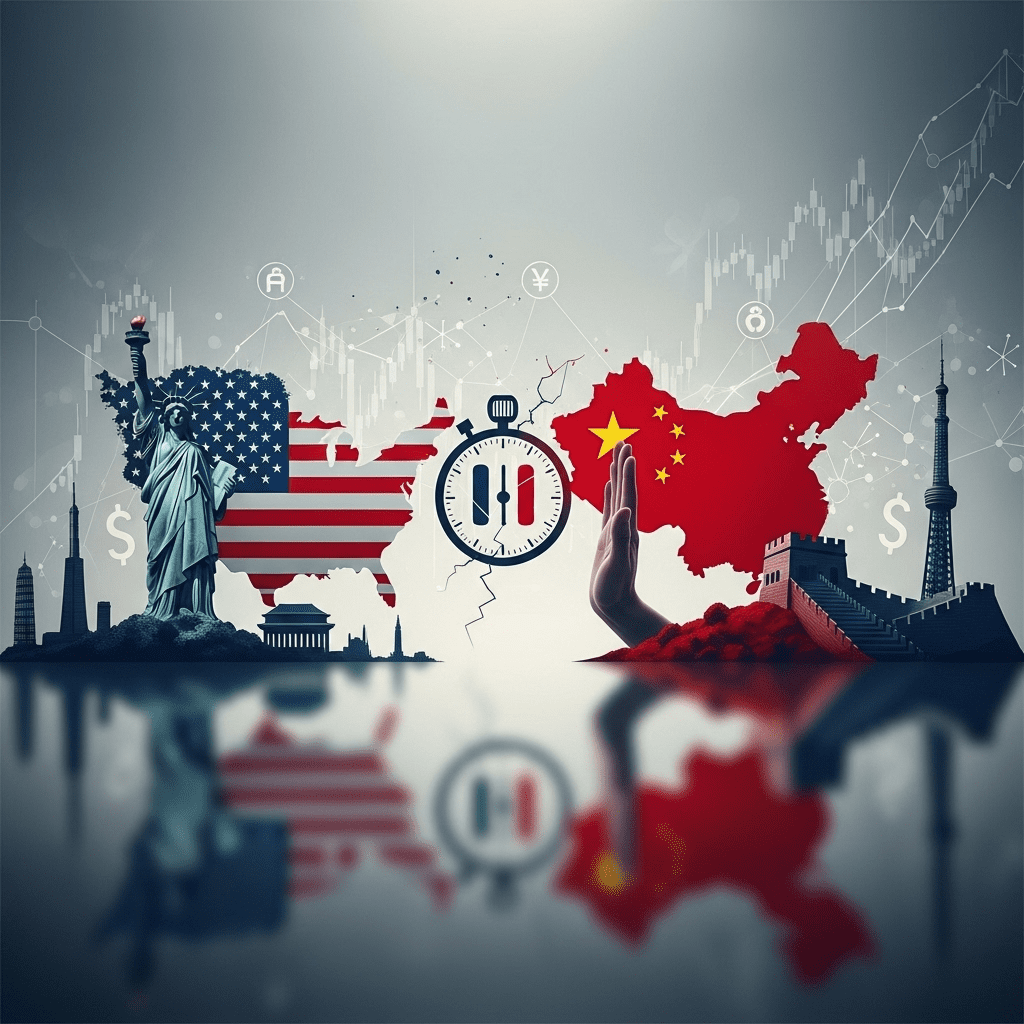
Washington secured a temporary halt to new tariffs with China ($FXI) as the two superpowers revealed a surprising agreement on October 30. The U.S. China trade war agreement froze billions in planned duties—but experts say investors shouldn’t expect lasting peace.
U.S. and China Freeze New Tariffs Amid $120 Billion Trade Dispute
The U.S. and Chinese governments announced late Wednesday a mutual freeze on additional tariffs affecting goods worth over $120 billion, effective November 1, 2025. The White House specified that 10% tariffs on $38 billion in electronics and agricultural products would remain suspended, while China listed a commitment to continue purchasing U.S. soybeans ($SOYB) and semiconductors. According to Bloomberg, total bilateral trade for 2024 reached $575 billion, with tariffs having trimmed trade growth by 8.3% versus the 10-year average. Both sides continue to renegotiate key provisions tied to intellectual property and technology transfer. Investors reacted swiftly: the iShares China Large-Cap ETF ($FXI) rose 2.1% to $32.86 in after-hours trading, while the S&P 500 ($SPX) added 0.7% following the announcement. (latest financial news)
How Global Supply Chains and Emerging Markets Respond to Tariff Pause
The tariff pause is already reshaping global supply chains. In 2024, U.S. imports of Chinese consumer electronics dropped 11.5% year-over-year (U.S. Census Bureau), while Southeast Asian economies—like Vietnam and Malaysia—saw export surges of 14% and 9% respectively as companies diversified manufacturing away from mainland China. Consultancy McKinsey reports that 38% of multinationals surveyed have accelerated plans to build non-Chinese production capacity since 2022. Meanwhile, commodity prices such as soybeans and rare earths remain volatile: soybean futures ($SOYB) rebounded 4.3% after the deal, signaling renewed optimism for American farmers. The agreement offers short-term relief, but volatility persists as no permanent resolution is in sight. For real-time updates, see stock market analysis.
How Investors Should Position For Ongoing U.S.-China Tensions
Investors focused on global equities, technology, and agriculture should consider maintaining defensive positions. Continued U.S. scrutiny of Chinese technology firms like Alibaba ($BABA) and Huawei may depress sector valuations despite recent gains. Defensive assets including U.S. Treasuries and gold ($GLD) drew renewed inflows this week—bond ETF TLT climbed 1.3% on October 30 after risk sentiment rose. Traders favoring cyclical stocks should remain nimble, as policy news from either side frequently triggers rapid volatility. Exposure to Southeast Asian manufacturing or North American agricultural exporters may provide a buffer as supply chains diversify. For detailed investment strategy and insights on future catalysts, monitor U.S. policy responses and upcoming trade negotiations into 2026. Expect sector volatility to continue, especially in semiconductors and commodities. Visit financial news for ongoing guidance.
What Analysts Expect Next After Temporary Trade Truce
Industry analysts observe that the current tariff freeze is unlikely to mark the end of the trade war between the U.S. and China. According to Barclay’s research from October 2025, much of the progress is “symbolic,” as underlying issues around technology, cybersecurity, and manufacturing self-sufficiency remain unresolved. Market consensus suggests further rounds of negotiations—and fresh tariffs—are probable in 2026 if structural reforms stall or political pressure mounts in Washington or Beijing.
U.S. China Trade War Agreement Signals Uncertain Path for Investors
While the U.S. China trade war agreement temporarily reduces market risk, investors should remain vigilant for abrupt policy reversals or renewed tariff threats in coming quarters. Watch for signals from ongoing negotiations, shifts in supply chains, and commodity price responses. Remaining flexible and globally diversified is a prudent strategy as U.S.-China relations continue to evolve and affect asset prices worldwide.
Tags: U.S.-China trade, FXI, tariffs, global markets, investor strategy