







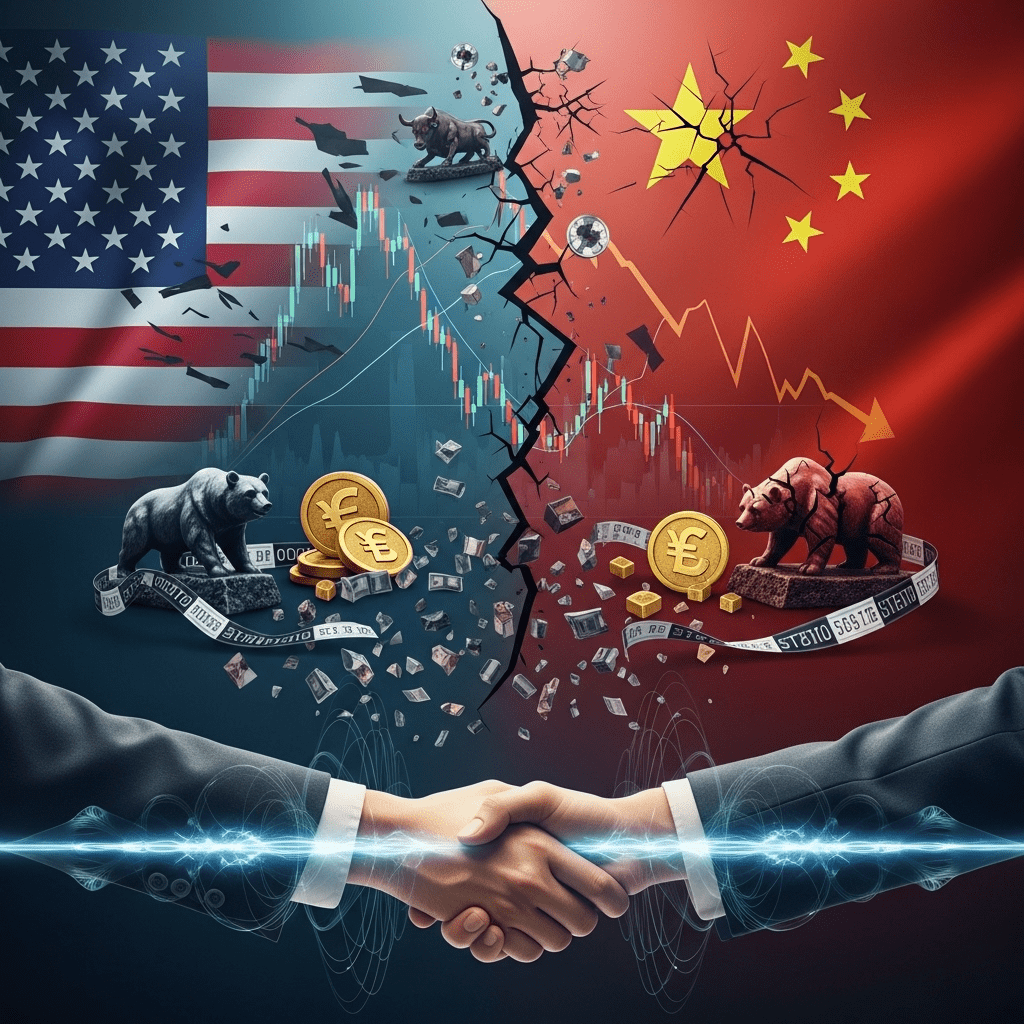
The ongoing U.S.-China trade dispute fans worries about what’s next for the stock market among investors and analysts, as fresh tariffs and hostile rhetoric threaten to disrupt global supply chains and dampen economic growth in 2025. With heightened volatility and shifting risk sentiment, market participants are scrutinizing each development for clues on how equity markets may react in the months ahead.
How the U.S.-China Trade Dispute Fans Worries About What’s Next for the Stock Market
Throughout 2024 and into 2025, trade tensions between the world’s two largest economies have periodically unsettled global equities. The U.S.-China trade dispute fans worries about what’s next for the stock market as tit-for-tat tariffs remain in place on hundreds of billions of dollars in goods. Uncertainty persists over the direction of negotiations, further complicating investment decisions for both institutional and retail investors.
Recent moves by Washington to restrict Chinese technology imports and Beijing’s response with its own countermeasures have deepened fears of a protracted economic standoff. According to the International Monetary Fund, ongoing disputes could trim up to 0.5% from global GDP growth in 2025. For U.S. stocks, this environment raises the risk of lower corporate earnings, especially in export-driven sectors and multinational companies, making market outlooks challenging.
Implications for Market Volatility and Investor Sentiment
As the U.S.-China trade dispute continues to dominate headlines, its impact on market volatility has intensified. Month-to-month swings in the VIX, the so-called “fear gauge,” have mirrored policy shifts and contentious statements from both sides. Investors are now factoring in potential supply chain disruptions and retaliatory tariffs as core variables in their risk calculations.
Market strategists at major banks have emphasized that short-term corrections may persist, especially in technology, semiconductors, and automotive stocks with significant exposure to China. Meanwhile, sectors perceived as domestically focused, such as healthcare and select consumer staples, may hold up better against trade headwinds.
Evaluating Risks: What’s Next for the Stock Market?
The question of what’s next for the stock market, given the persistent U.S.-China conflict, will likely depend on several key factors: the outcome of ongoing trade negotiations, potential shifts in U.S. or Chinese industrial policy, and broader geopolitical trends. New tariffs or restrictions could depress profit margins, while any breakthrough agreement might lift sentiment dramatically.
Long-Term Economic Impacts and Global Supply Chains
Trade uncertainty is already prompting many multinational corporations to reassess their global supply chains. The phenomenon of “de-risking” — shifting manufacturing operations out of China or diversifying suppliers — has accelerated since 2023, but progress remains uneven due to high costs and logistical challenges.
Economists warn that a prolonged trade standoff could lead to higher input prices and slower productivity gains worldwide. For investors, this means closely monitoring emerging trends in supply chain strategy, including the potential for nearshoring or reshoring by major U.S. manufacturers.
Investor Strategies: Navigating Trade-Driven Uncertainty
Many market experts recommend a diversified approach during times of trade-related uncertainty. By balancing international and domestic equities, as well as considering alternative assets like gold or U.S. Treasuries, investors can guard against concentrated risks. Keeping a watchful eye on developments in U.S.-China negotiations will remain critical throughout 2025.
Additionally, leveraging investment insights and staying informed about global macroeconomic data can empower individual investors to make well-timed portfolio adjustments. For instance, sectors that may benefit from U.S. industrial policy or greater government investment, such as renewable energy and infrastructure, have attracted renewed interest as a potential hedge against trade friction.
Conclusion: Staying Alert as U.S.-China Trade Dispute Fans Market Worries
The fact that the U.S.-China trade dispute fans worries about what’s next for the stock market is undeniable, especially amid heightened policy uncertainty and shifting global economic currents. Investors should continue to monitor negotiations, sector performance, and global growth projections when making portfolio decisions in 2025. By staying informed and flexible, traders and long-term investors alike can better navigate the complexities brought on by the enduring rivalry between the U.S. and China.










