





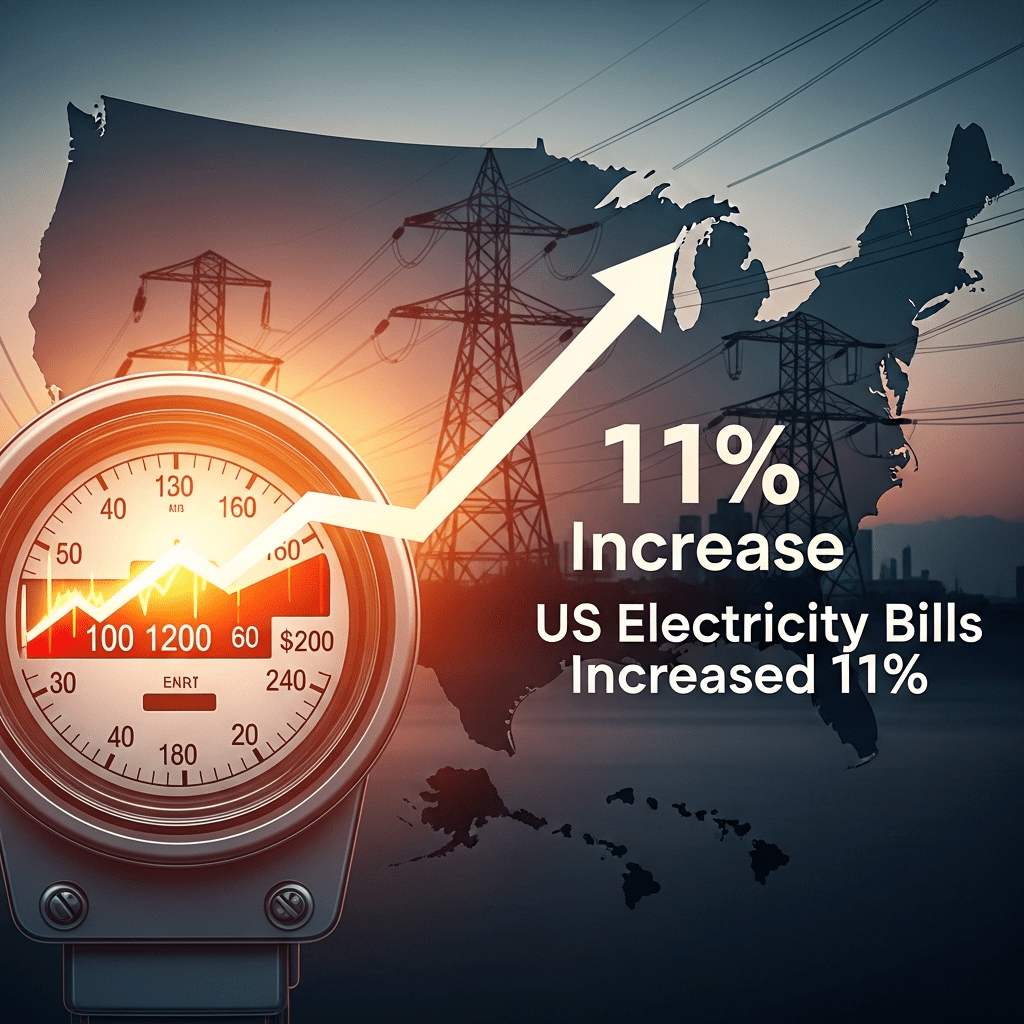
US households saw electricity bills rise 11% nationwide during President Trump’s second term, the Energy Information Administration (EIA) revealed, pushing costs for millions higher than analysts projected. With US electricity bills increased 11% since January 2021 and policy debates intensifying, what’s really driving Americans’ higher power costs?
US Power Prices Rise 11% in Four Years, EIA Data Shows
Electricity costs in the US surged 11% between January 2021 and October 2025, according to recently released data from the US Energy Information Administration (EIA). The average monthly residential power bill now stands at $140.20, up from $126.35 at the start of President Trump’s second term. In several major markets, such as California and Texas, price hikes outpaced the national average, with California utilities like PG&E Corp. ($PCG) charging 16% more per kilowatt-hour.[1] EIA’s October 2025 report attributes the increases to higher natural gas prices, rising infrastructure costs, and increased weather-related outages impacting the grid.
Why US Energy Sector Faces Higher Costs and Investor Volatility
The spike in US electricity bills reflects deeper cost pressures in the energy sector. Natural gas futures climbed 21% over the same period, reaching $4.22/MMBtu by September 2025, a key driver for utilities reliant on gas-fired generation.[2] Additionally, capital expenditures for grid infrastructure modernization grew 12% from 2021-2024, according to an Edison Electric Institute survey. These factors, along with climate-driven power disruptions and regulatory uncertainty, have increased volatility across utility sector stocks and bond yields. Utilities Select Sector SPDR ETF ($XLU), tracking the industry, returned just 1.8% year-to-date as of October 2025, lagging the S&P 500’s 9.4% gain.[3]
How Investors Can Navigate Utility Stocks Amid Rising Energy Bills
For investors, the 11% rise in US electricity bills signals operational challenges but also opens select opportunities. While sector-wide returns have been tepid, dividend yields in utilities have climbed, averaging 3.6% for major players like Duke Energy ($DUK) and Southern Company ($SO). Defensive investors may favor regulated utilities with the pricing power to pass costs to consumers, whereas traders should watch for increased short-term volatility tied to regulatory news or weather events. Those seeking diversification can explore infrastructure ETFs or green energy strategies. For expanded sector insights, see our stock market analysis or the latest financial news. Notably, California and Northeastern states face elevated regulatory risk, highlighting the need for regional due diligence.
What Analysts Expect for US Energy Prices in 2026
Market analysts warn that price pressures may persist into next year. According to S&P Global Commodity Insights, ongoing supply constraints in natural gas and pending grid upgrades suggest limited near-term relief for consumers. Industry strategists observe that federal grid modernization funding and rate reviews could offer stability in late 2026, but consensus expects above-inflation price growth to continue absent structural reforms or dramatic fuel cost declines.
US Electricity Bills Increased 11%: Signals for Energy Investors in 2025
With US electricity bills increased 11% in Trump’s second term, energy sector investors should closely monitor regulatory shifts and fuel price trends. Price hikes are reshaping utility profitability and the risk/return profile. Expect ongoing volatility—and potential opportunity—across both regulated and renewable-focused assets as the market adjusts to higher power costs.
Tags: US electricity bills, $PCG, energy sector, utilities stocks, EIA