





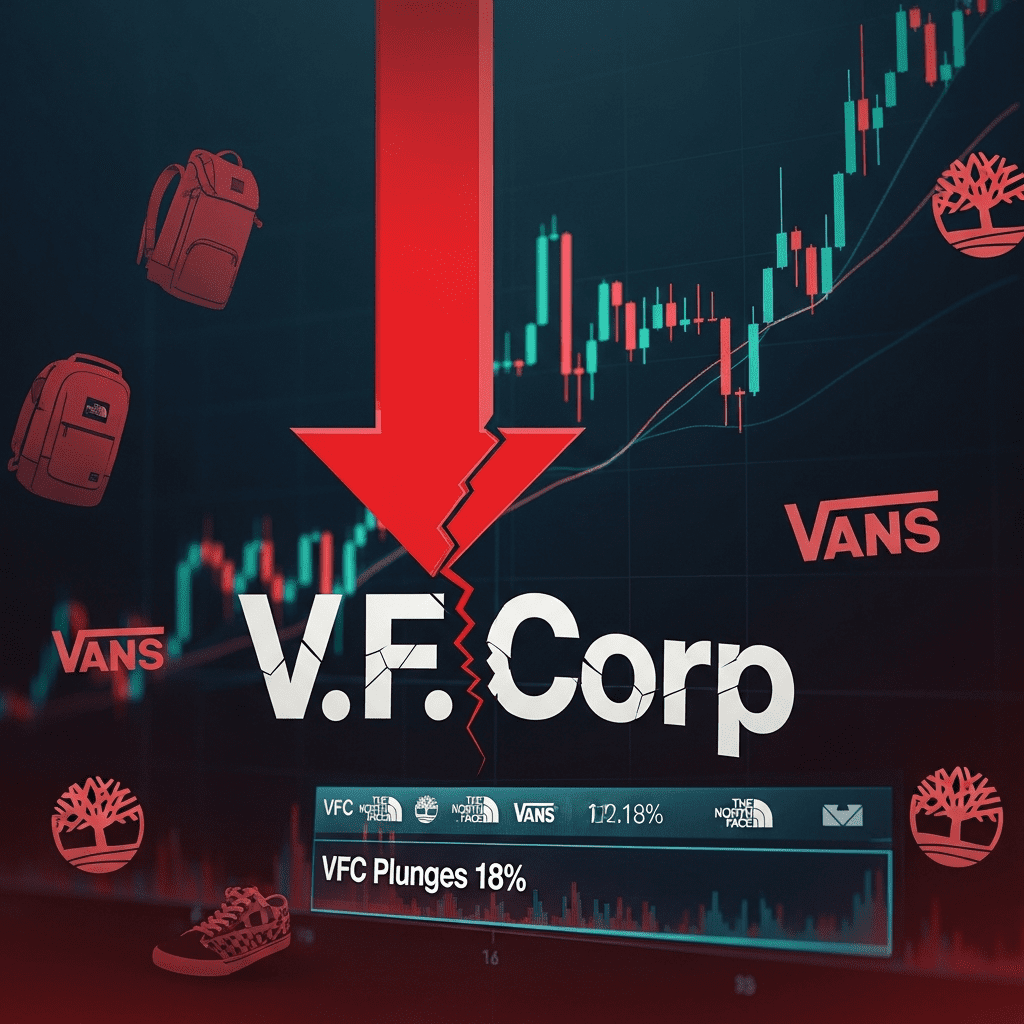
V.F. Corporation ($VFC) revealed sharply reduced earnings guidance, sending its shares plunging 18% to $12.87 at Thursday’s close. Jim Cramer labeled V.F. Corporation guidance shock as “shockingly dismal,” compared to Wall Street forecasts. Why is the market reacting so violently to this unexpected disclosure?
Jim Cramer Flags 25% EPS Downgrade in V.F. Corp Guidance
V.F. Corporation ($VFC), the parent behind North Face, Vans, and Timberland, unexpectedly cut its fiscal 2025 guidance on October 31, slashing full-year earnings per share estimates by 25%—from $1.60 to $1.20. Revenue outlook was trimmed to “flat to down low single digits,” departing from previous growth targets stated in the company’s Q2 2025 earnings call (Reuters). This miss triggered a massive selloff: $VFC’s trading volume surged 340% over its 30-day average, with market capitalization wiped by $1.8 billion in a single session. Cramer’s critical remarks on CNBC further fueled the negative sentiment, describing the outlook as the weakest he has seen from the company in a decade.
How V.F. Corporation’s Warning Ripples Across Retail Sector
The guidance shock from V.F. Corporation underscores persistent weakness in the branded retail sector. This warning comes amid a difficult period for apparel: the S&P 500 Apparel & Accessories Index dropped 6.4% since October 1, pressured by tepid U.S. back-to-school spending and faltering European demand (stock market analysis). Rival companies like Levi Strauss & Co. ($LEVI) and PVH Corp. ($PVH) also reported sluggish wholesale shipment volumes in recent quarters. As consumers continue to prioritize essential purchases, discretionary categories like outdoor apparel face mounting inventory and margin headwinds. The sector’s inventory/sales ratios remain above 1.2x, according to U.S. Census Bureau data for September 2025, signaling ongoing supply-demand imbalances.
Investor Playbook: Navigating V.F. Corporation Guidance Shock
For investors holding retail or consumer stocks, the V.F. Corporation guidance shock demands renewed caution. Short-term traders may exploit elevated volatility in $VFC, which saw implied option volatility spike over 75%. Long-term, portfolio managers should scrutinize exposure to apparel, footwear, and discretionary consumer sectors. Consider reallocating to diversified retailers or essentials-focused names less dependent on cyclical apparel trends. Meanwhile, defensive sectors and alternative asset classes may offer relative shelter from segment-specific shocks. For a broader view, review stock market analysis and the latest financial news for trends impacting the consumer discretionary landscape.
Experts Brace for Prolonged Retail Margin Pressure After Miss
Market commentary from analysts at Jefferies and Morgan Stanley suggests the V.F. Corporation miss points to structural margin challenges. With promotional activity increasing and cost inflation showing few signs of abating, industry strategists expect further earnings risk for branded retail through at least mid-2026. Industry analysts observe that consumer confidence readings remain below pre-pandemic averages, heightening caution into the holiday period. Most see stabilization as a multi-quarter process, particularly for companies with legacy wholesale exposure.
What V.F. Corporation Guidance Shock Means for Investors in 2025
The V.F. Corporation guidance shock signals renewed volatility for apparel stocks heading into year-end 2025. Investors should monitor upcoming retail earnings and adjust portfolios for a tougher demand environment. Watch for signals of inventory normalization and margin recovery before re-entering the sector, as prolonged weakness may persist longer than most anticipate.
Tags: VFC, V.F. Corporation, earnings guidance, retail stocks, Jim Cramer