







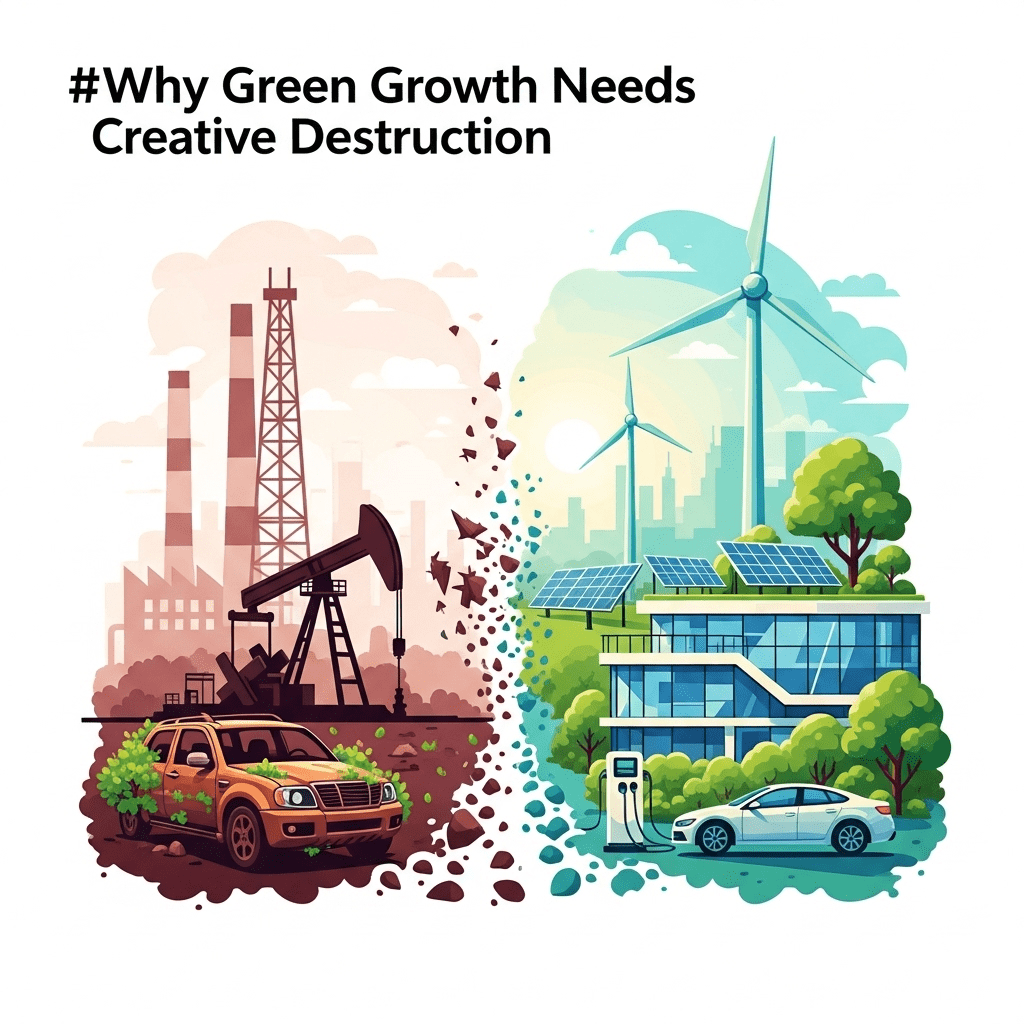
As the world accelerates its transition towards sustainability, the question of why green growth needs creative destruction has become central to economic debate in 2025. Policymakers, investors, and industry leaders are witnessing firsthand how the deliberate dismantling of outdated, polluting industries paves the way for the rise of new, eco-friendly business models. Understanding this dynamic is crucial for informed investment, robust policy-making, and future-proofed economic strategies.
Why Green Growth Needs Creative Destruction to Succeed
The principle of creative destruction—coined by economist Joseph Schumpeter—refers to the process by which new innovations supplant and transform legacy industries. In the context of today’s sustainability revolution, this concept is especially relevant. Green growth, defined as economic development that ensures environmental sustainability, cannot thrive without dismantling old, carbon-intensive sectors such as coal power, internal combustion vehicles, and single-use plastic manufacturing.
For example, the ongoing phase-out of fossil fuels in favor of renewables is disrupting global energy markets. According to the International Energy Agency, renewable energy capacity is set to surpass that of coal by 2025, a trend that exemplifies creative destruction in action. As legacy industries decline, investment and innovation are redirected towards clean technologies, electrification, and circular economy solutions.
Investment Shifts: From Legacy to Green Innovation
Creative destruction is not merely about eliminating old practices—it’s about reallocating capital, talent, and resources. Institutional investors, recognizing the risks posed by stranded assets and climate regulation, are divesting from heavy emitters and channeling funds into green bonds, clean tech startups, and ESG-compliant portfolios. This shift is evident in the booming global sustainability-linked finance sector, which reached $1.6 trillion in issuance in 2024 and is forecasted to grow further this year. For those seeking responsible investment opportunities, understanding why green growth needs creative destruction is essential for long-term returns.
The Economic Case for Creative Destruction in Sustainability
Economic resilience underpins the rationale for creative destruction in the green transition. When protectionist policies prop up declining, carbon-heavy industries, they often result in sunk costs, inefficiency, and missed opportunities for innovation. Conversely, embracing creative destruction spurs job creation in sunrise sectors such as battery manufacturing, green hydrogen, and advanced materials recycling. The International Labour Organization estimates that the green transition could create 24 million net new jobs globally by 2030, offsetting losses in declining industries.
Moreover, creative destruction drives down costs and improves efficiencies. As more capital flows to sustainable infrastructure and technology, economies of scale reduce the price of clean solutions—exemplified by the 85% drop in solar photovoltaic costs over the past decade.
Policy Levers to Accelerate Green Creative Destruction
Governments have a decisive role in accelerating the creative destruction necessary for green growth. Policies such as carbon pricing, direct investment in clean R&D, and phase-out subsidies for fossil fuels incentivize market forces to rebalance. For investors and policy analysts, staying abreast of these regulatory shifts is crucial. Timely insights into evolving carbon markets and climate policy trends are available at our economy news section, offering guidance on navigating the 2025 investment landscape.
Risks and Opportunities: Navigating the Disruption
The process of creative destruction is not without turbulence. Transitional risks—such as job losses in declining sectors, supply chain shocks, and regional disparities—require a proactive approach. Policymakers can ease these dynamics through reskilling programs, social safety nets, and transition funds. Investors, meanwhile, should diversify portfolios to balance exposure between disruptors and those being disrupted.
Yet, disruption also creates opportunity. Companies embracing circular business models, sustainable agriculture, or emissions-free transportation are emerging as industry leaders. For more in-depth market analysis on these trends, a strategic approach to creative destruction is encouraged.
Conclusion: Embracing Change for Sustainable Prosperity
In 2025, understanding why green growth needs creative destruction is fundamental for anyone invested in the global economic future. Rather than viewing creative destruction as a threat, it should be recognized as the driving force behind renewal, efficiency, and sustainable wealth creation. Only by letting go of outdated models can economies unlock new avenues for prosperity and environmental stewardship in the decades ahead.










