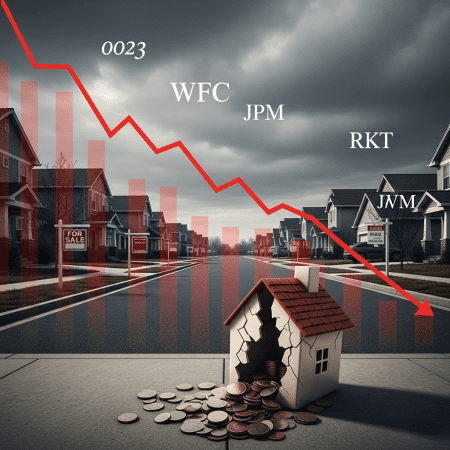







The S&P 500 ($SPX) slid 8% in Q4 2025, triggering $120 billion in outflows from equity funds last month alone. As hard data signals mounting risk aversion, why investors are increasingly fatalistic is now driving portfolio realignments and fueling market volatility. The shift stuns even seasoned strategists.
Equity Outflows, Bond Yields, and Spiking Volatility Fuel Fatalism
The late-2025 market landscape underscores a profound shift in investor sentiment. U.S. equity funds reported $120 billion in outflows in October, the largest monthly exodus since March 2020, according to data from EPFR Global reported by Bloomberg on November 15, 2025. The S&P 500 ($SPX) declined 8% from September 1 to November 15, while the CBOE Volatility Index (VIX) surged 47% in the same period—its sharpest two-month rise since the pandemic. Meanwhile, 10-year Treasury yields pushed above 5.2% for the first time since 2007, per Reuters market data.
These concurrent moves do more than just rattle risk appetite: they demonstrate a historic rebalancing of investor expectations worldwide. Foreign selling of U.S. equities reached $45.3 billion in October (U.S. Department of the Treasury TIC data, November 2025), while corporate investment-grade bond issuance fell by 18% year-over-year as risk premiums crept above 200 basis points. The MSCI All-Country World Index fell 7.1% since early September. According to Lipper, almost every major global equity fund category posted negative flows, as investors scrambled to reduce risk exposure and shore up cash positions.
Socioeconomic Shifts and Macroeconomic Risks Reshape Market Sentiment
The wave of fatalism extends beyond asset prices. Persistent inflation remains a top concern: U.S. CPI printed +3.6% year-over-year in October, stubbornly above the Federal Reserve’s 2% target (U.S. BLS, November 2025). Eurozone inflation also surprised at +3.3% (Eurostat), while the Bank of Japan’s policy tightening left Asian yields rising, pressuring risk assets globally.
Multiple macro threats compound the gloom. Geopolitical tensions, from ongoing Ukraine conflict escalations to Middle East shocks, have driven Brent crude ($BRN) above $95/barrel, raising 2026 stagflation fears. Meanwhile, the IMF’s October 2025 World Economic Outlook downgraded global GDP growth forecasts to just 2.2% for 2025, compared to 3.0% in 2024. High-profile bankruptcies in the Chinese property sector (Country Garden Holdings, $200B total liabilities) and growing U.S. commercial real estate defaults exacerbate tail risks.
These shocks weigh heavily on investor psychology. According to Bank of America’s November 2025 Global Fund Manager Survey, 67% of respondents describe their market view as “bearish,” the highest since 2008. Over 40% expect a U.S. recession in the next 12 months, compared to only 28% at the start of 2025.
Diversification, Safe Havens, and Tactical Moves Dominate Strategy
Amid elevated uncertainty, both institutional and retail investors are reassessing strategies. Cash allocations hit 15% of global portfolios in Q4—up from 10% in late 2024—reflecting a defensive tilt (BofA survey). The U.S. dollar index (DXY) rallied 5.9% since August, as safe-haven flows dominated. Meanwhile, gold ($GLD) hit a record $2,420/oz in November, up over 14% year-to-date, with ETFs seeing net inflows of $19.6 billion in 2025 (World Gold Council).
Yet the fatalistic mindset has fueled risk aversion, not just defensive investment. Tech leaders such as Alphabet ($GOOGL) and Tesla ($TSLA) experienced steep corrections—shares off 13% and 18% respectively from July highs. The Nasdaq Composite ($IXIC) fell nearly 11% since September. In the crypto sector, Bitcoin ($BTC) dropped from $54,200 to $40,750 (-24%) in just 10 weeks amid regulatory and macro headwinds. For further insights on digital asset trends, see our cryptocurrency market trends coverage.
Bond investors are not immune. Surging yields and narrowing spreads prompted $38 billion in redemptions from high-yield bond funds over the past three months (Lipper data). Treasuries, once seen as a ballast, posted their third-worst calendar year return (-5.2%) since 1970, according to Bloomberg Barclays Indices.
Against this backdrop, active managers are stress-testing portfolios and exploring alternatives, from private credit to short-duration and inflation-protected assets. For timely updates on market moves and analysis, visit our stock market analysis section and follow the latest in financial news developments.
Analysts Predict Volatile Road Ahead Amid Policy and Sentiment Shifts
Leading analysts believe investor fatalism will remain a powerful driver through early 2026. Morgan Stanley’s October 2025 outlook warns that “persistent inflation shocks are likely to keep policy rates elevated,” reducing chances for a 2026 easing cycle. JPMorgan’s mid-November research notes that “elevated volatility and fat tails remain a structural feature of post-pandemic markets.”
Several asset managers, surveyed in late Q3, now recommend continued overweight to quality stocks and underweight to speculative growth, with renewed interest in dividend yield and infrastructure. BlackRock’s Q4 2025 commentary observes that “with market volatility at multi-year highs, investors are shifting toward real assets and away from duration risk.”
At the policy level, the Federal Reserve signals a data-dependent approach, dousing hopes for swift rate cuts. Fed Chair Powell’s October 2025 remarks highlighted the risk of inflation setback. The European Central Bank and Bank of England face similar constraints, while the People’s Bank of China maintains a cautious pro-growth stance amid slowdowns.
Downside risks are highlighted by Fitch, which in November 2025 noted the complex “feedback loop” between rising yields, tightening liquidity, and lower risk tolerance.
What Rising Fatalism Means for Markets: Investor Takeaways for 2025
As the hard data and sentiment indicators confirm, why investors are increasingly fatalistic lies in the unique confluence of inflationary pressure, slowing growth, and repeated geopolitical shocks. This fatalism is manifesting in flows away from equities, surges into cash and safe havens, and aggressive risk management across asset classes.
While doom-and-gloom may seem pervasive, opportunity persists for well-prepared investors. Revisiting portfolio allocations, stress-testing defensive exposures, and keeping an eye on macro and sector catalysts will be vital. As highlighted by numerous analyst outlooks, flexible strategies and vigilance remain essential. To stay ahead, leverage trusted resources in stock market analysis, cryptocurrency market trends, and timely financial news coverage.
Tags: investor sentiment, fatalism, market volatility, macroeconomics, portfolio strategy