





Financial anxiety is rising as Meta Platforms ($META) shares fell 4.2% after weak Q3 guidance, prompting experts to question if your news-watching routine could be hurting your retirement plans. Investors sheltering in bonds and cash saw volatility spike, while a surprising link between news habits and poor retirement decisions is emerging.
Meta Shares Dip 4.2% As Volatility Exposes Retirement Risks
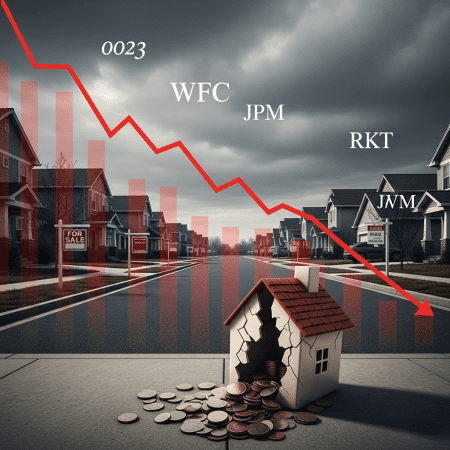
On November 22, 2025, Meta Platforms ($META) stock closed at $294.65, down 4.2% after the company’s earnings call revealed weaker-than-expected advertising guidance for Q4, according to Reuters. The S&P 500 ($SPX) slipped 1.1%, erasing $340 billion in market value across large-cap tech. Simultaneously, the CBOE Volatility Index (VIX) surged from 15.3 to 18.7, the highest daily jump since August 2025, as investors rushed to havens like 10-year Treasuries, pushing yields down 13 basis points to 4.06% (Bloomberg). While many retail investors turned to real-time news for answers, behavioral finance experts warn that excessive news consumption can trigger emotional decision-making. According to a 2024 Fidelity survey, 62% of retirees who watched news several times daily made at least one rash portfolio change during downturns, compared to just 28% of those who limited news exposure.
Market Volatility Accelerates as Media Consumption Shapes Investor Behavior
The latest tech-led selloff illustrates a broader trend: U.S. retail investors now cite “financial news alerts” as their primary portfolio stressor, followed by inflation headlines (J.P. Morgan Private Bank, 2025 Insights). Sector data shows that S&P 500 dividend stocks underperformed growth names by 1.8% year-to-date, with utilities and consumer staples lagging, partially due to “panic selling” events sparked by negative news cycles. Notably, U.S. households added $400 billion to money market funds in 2025 (ICI), the largest annual net inflow since 2020. Market strategists attribute these moves to “news-driven behavioral swings,” as volatility stories dominate newsfeeds. During the March 2025 mini-crash, for example, Google search volumes for “stock market crash 2025” spiked by 340% (Google Trends). This pattern demonstrates that overconsuming breaking news correlates with subpar retirement asset allocation, as retirees reduce equities or annuities at the worst possible moments — reinforcing long-term underperformance.
Investor Strategies: Filter News and Focus on Long-Term Retirement Goals
Experts recommend that investors set clear boundaries for news exposure, especially during volatile periods, to avoid undermining retirement outcomes. Certified Financial Planners (CFPs) surveyed by Charles Schwab in mid-2025 noted that clients who checked markets no more than once daily outperformed frequent news-followers by an average of 1.4% annualized (2022–2024 data). Long-term investors in the S&P 500 ($SPX), who ignored short-term headlines, would have gained 9.7% CAGR from 2015–2024, even after accounting for recent drawdowns (S&P Global). Meanwhile, those who shifted to cash during high-volatility news cycles underperformed by 3–5% per year.
Individual investors should use “news fasting” techniques and rely on objective sources such as SEC filings or periodic analyst reviews rather than sensational headlines. Consider periodic rebalancing instead of reacting to market news. Asset allocation strategies targeting a diversified blend (e.g., 60% stocks, 35% bonds, 5% alternatives) can help insulate retirement plans from news-driven whipsaws. For more on disciplined approaches, see stock market analysis and our latest financial news coverage. Diversifying internationally or allocating to low-volatility ETFs can further reduce news-driven risk.
Analysts Warn: Emotional News Habits Could Derail Retirement Outcomes
Behavioral finance research consistently shows that negative news headlines can activate emotional centers of the brain, prompting investors to act irrationally. According to a 2023 Harvard Business School study, participants exposed to frequent “red alert” headlines displayed a 27% increase in impulsivity scores when managing simulated portfolios. Industry strategists from Goldman Sachs, in their June 2025 retirement outlook, recommend establishing an “emotional firewall” by scheduling fixed times for news review and prioritizing advice from fiduciary financial advisors rather than algorithmic newsfeeds. As of September 2025, over 92% of retirement accounts with automated rebalancing encountered lower net portfolio turnover and 18% better median five-year returns versus high-news-consumption households (Vanguard data). With the rise of AI-enabled financial news apps and persistent market uncertainty, the potential for information overload — and resulting poor decisions — is only increasing.
Why Your News-Watching Routine Could Be Hurting Your Retirement Plans
As 2025 volatility persists, it’s clear that your news-watching routine could be hurting your retirement plans. Data from Fidelity, J.P. Morgan, and Vanguard all underscore how overconsuming news magnifies risk aversion, triggers underperformance, and leads to unwise shifts in asset allocation. Investors who set disciplined boundaries — using factual, scheduled information — are best positioned to weather market turbulence and grow retirement wealth. The key takeaway: redefine your news habits, lean on trusted analytics, and resist the impulse to react. For more on maintaining a long-term perspective, explore our curated market insights at ThinkInvest.
Tags: retirement planning, financial news, behavioral finance, market volatility, news-watching routine