Introduction to Crypto Storage
Cryptocurrency has become an integral part of modern finance, offering opportunities for investment, trading, and decentralized transactions. However, storing crypto safely remains one of the most critical aspects of managing digital assets. Unlike traditional money, cryptocurrency is entirely digital and can be vulnerable to theft, hacking, and loss. Choosing the right storage method is essential to protect your investments and ensure accessibility when needed.
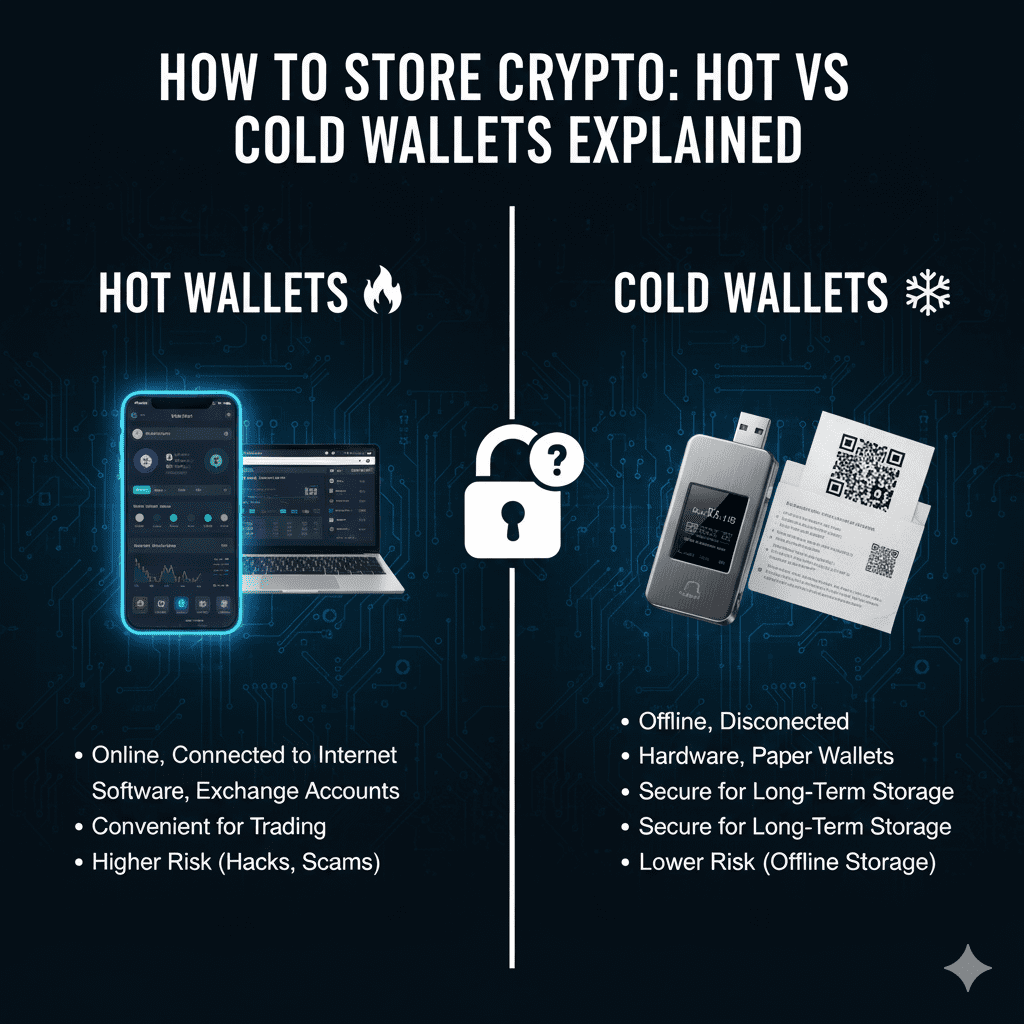
Two primary methods exist for storing cryptocurrency: hot wallets and cold wallets. Each offers different levels of security, convenience, and control. This guide explains the differences, benefits, and risks of hot and cold wallets to help you make an informed choice.
What is a Hot Wallet?
A hot wallet is a cryptocurrency wallet that is connected to the internet. These wallets are designed for convenience and quick access, making them ideal for active traders and those who frequently use crypto for transactions. Hot wallets come in many forms, including web wallets, mobile wallets, and desktop wallets.
Key Features of Hot Wallets
Hot wallets provide easy access to your funds from anywhere with an internet connection. They are generally free or low-cost to use and support multiple cryptocurrencies. Most hot wallets offer user-friendly interfaces and additional features such as portfolio tracking, transaction history, and integration with exchanges.
Advantages of Hot Wallets
Hot wallets are highly convenient. You can quickly send and receive cryptocurrency without delays. They are ideal for traders or users who make frequent transactions. Hot wallets also provide instant access to your crypto and often include tools for monitoring market prices and managing multiple assets in one place.
Disadvantages of Hot Wallets
The main drawback of hot wallets is security. Because they are connected to the internet, they are vulnerable to hacking, phishing attacks, and malware. If your device or wallet provider is compromised, your funds could be stolen. Additionally, some hot wallets rely on third-party platforms, which introduces counterparty risk if the platform fails or is hacked.
What is a Cold Wallet?
A cold wallet, also known as a cold storage wallet, is a cryptocurrency wallet that is not connected to the internet. Cold wallets are used primarily for long-term storage and security. They are less convenient for frequent transactions but offer significantly higher protection against online threats.
Key Features of Cold Wallets
Cold wallets can take the form of hardware devices, paper wallets, or even offline computers configured for secure storage. Hardware wallets are physical devices that store private keys offline. Paper wallets involve printing your private and public keys on a physical medium and keeping it in a secure location.
Advantages of Cold Wallets
Cold wallets offer superior security because they are offline. They are immune to hacking and malware attacks that target internet-connected devices. Cold wallets are ideal for investors holding large amounts of cryptocurrency for long periods. Hardware wallets are portable and can store multiple cryptocurrencies securely. Cold storage ensures that even if your computer is compromised, your crypto remains safe.
Disadvantages of Cold Wallets
The main disadvantage of cold wallets is convenience. Accessing funds requires extra steps, such as connecting a hardware wallet to a computer or manually entering keys from a paper wallet. They are also at risk of physical damage, loss, or theft if not stored properly. Users must take extra precautions to back up keys and keep them in secure locations.
Hot Wallet vs Cold Wallet: Key Differences
The choice between hot and cold wallets depends on your priorities. Hot wallets are suitable for convenience and frequent transactions, while cold wallets focus on security for long-term storage. Here are some key differences:
* Security: Cold wallets provide higher security as they are offline. Hot wallets are more exposed to online threats.
* Accessibility: Hot wallets offer instant access to funds. Cold wallets require additional steps to access.
* Use case: Hot wallets are ideal for traders and daily users. Cold wallets are better for long-term investors.
* Cost: Hot wallets are usually free or low-cost. Hardware cold wallets may require an initial purchase.
Best Practices for Using Crypto Wallets
Regardless of whether you use a hot or cold wallet, following best practices is essential to protect your assets.
* Always back up your private keys and recovery phrases.
* Use strong, unique passwords and enable two-factor authentication for hot wallets.
* Store cold wallets in secure locations, such as a safe or bank deposit box.
* Regularly update wallet software to ensure you have the latest security patches.
* Consider splitting funds between hot and cold wallets for convenience and security.
Choosing the Right Wallet for Your Needs
Your choice of wallet depends on your trading frequency, investment size, and security preferences.
* If you are an active trader who frequently moves cryptocurrency, a hot wallet may be more convenient.
* If you are a long-term investor holding significant amounts of crypto, a cold wallet provides stronger protection.
* Many users adopt a hybrid approach, keeping a portion of funds in a hot wallet for transactions and the majority in cold storage for safety.
Conclusion
Storing cryptocurrency securely is essential for protecting your digital assets. Hot wallets provide convenience and quick access but carry higher online risks. Cold wallets offer superior security for long-term storage but are less convenient for daily transactions. By understanding the differences between hot and cold wallets, assessing your needs, and following best practices, you can ensure that your cryptocurrency remains safe while remaining accessible when needed.
The right choice depends on your trading activity, investment strategy, and risk tolerance. Many investors find that using both hot and cold wallets in combination provides the best balance of security and convenience.